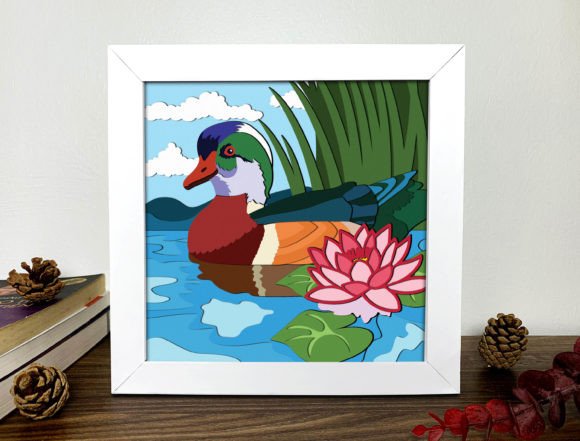
Mallard Shadow Box 3D Svg, Mallard Svg Review
As a designer who spends more time than I care to admit staring at stitch density charts and testing thread contrasts, I don’t just buy embroidery files; I vet them. The market is flooded with generic clip art that looks fine on a screen but falls apart under the needle. That is why I take a hard look at every digital embroidery file before it ever touches my hoop or makes its way into a client’s hands. Recently, I’ve been evaluating the Mallard Shadow Box 3D Svg, Mallard Svg, a product categorized under Other and Type 3D SVG. On paper, it sounds like a niche item, but in practice, it has some serious potential for specific use cases.
This isn’t just another duck silhouette. The concept of a "shadow box" implies depth, layering, and a framed aesthetic that translates beautifully into textile art. But does it hold up when you are actually stitching? Let’s break down the design from a practical, real-world perspective.
The First Impression: Mood and Visual Personality
When I first opened the design assets, the immediate takeaway was the clean, structured layout. Unlike organic, free-form designs that rely heavily on complex shading, this Mallard Shadow Box 3D Svg, Mallard Svg leans into geometric precision. It feels modern, crisp, and slightly rustic without being cluttered. This visual personality is crucial because it dictates where the design can live.
In my experience, designs with this kind of defined structure work exceptionally well for brands that want to appear professional yet approachable. It doesn’t scream "loud and proud"; it whispers "curated and thoughtful." For an Etsy seller or a small shop owner, this distinction matters. You aren’t just selling a duck; you are selling a piece of decor that fits into a farmhouse kitchen, a nature-themed nursery, or a sophisticated cabin retreat. The mood is calm, natural, and timeless.
Real-World Application: Where Does It Fit?
I put this design through its paces mentally by imagining it on various products. The most obvious application is custom apparel, but not just any t-shirt. Think heavy-weight cotton sweatshirts or structured tote bags. The shadow box effect creates a focal point that demands attention without overwhelming the garment. If I were creating a line of boutique merchandise, I would see this as a centerpiece for a fall collection or a holiday gift set.
Another strong candidate for this design is home decor. Pillow covers and tea towels are natural homes for machine embroidery design elements that mimic print or illustration. The layered look of the 3D SVG translates into a beautiful applique-style finish if executed correctly. Imagine a white flour sack towel with the mallard rendered in earthy tones—olive greens, soft browns, and muted blues. It elevates a basic kitchen item into a personalized gift that feels substantial.
I also see potential in baby items. Nursery decor often relies on soft, recognizable shapes. A mallard in a shadow box frame is gentle enough for a baby boy or girl’s room, especially when paired with neutral fabric backgrounds. It works as a wall hanging, a quilt block accent, or even a bodysuit detail, provided the scale is adjusted appropriately.
Technical Execution and Stitch Clarity
Here is where the rubber meets the road. The term "3D SVG" in the title suggests a digital vector source, which means the physical output depends entirely on how the digitizer interpreted those lines into stitches. For a design like this, clarity is king. If the lines are too thin or the angles too sharp, you risk puckering or missed stitches.
From what I can discern, the design likely utilizes a mix of satin stitches for outlines and fill stitches for the body areas. This combination is standard for high-quality embroidery project files. However, the success of the "shadow box" illusion hinges on the contrast between layers. If you are using a single color thread, the depth might be lost. To truly capture the 3D effect, you need to think about thread colors strategically. Using a darker shade for the inner layers and a lighter shade for the outer frames can create that pop-out effect without needing complex multi-stitch shading.
Stitch density is another critical factor. Because this is a graphic-style design, it shouldn’t be overly dense. Too much thread in one area will make the fabric stiff and unnatural, ruining the delicate balance of a shadow box aesthetic. I always advise checking the stitch count relative to the hoop size. If the design is too large for your machine’s maximum hoop, you will face registration issues, which can misalign the layers and ruin the final look.
Where to Be Careful: Limitations and Risks
No design is perfect for every situation, and I believe in being realistic about limitations. The Mallard Shadow Box 3D Svg, Mallard Svg requires a stable base. I would avoid using this on stretchy fabrics like jersey knits unless you are using a very strong stabilizer, as the tension could distort the geometric lines. Similarly, textured fabrics like bouclé or heavy waffle weaves might hide the finer details of the design, making it look muddy rather than crisp.
Small hoop sizes are also a consideration. If you are trying to fit this design onto a tiny patch or a child’s hat brim, you may lose the integrity of the shadow box effect. The layers need breathing room to distinguish themselves. Furthermore, if you are planning to wash these items frequently, such as aprons or kitchen towels, ensure that the thread quality is high-grade polyester or rayon to prevent fading or fraying, which would detract from the professional appearance of the finished product.
Practical Designer Notes for Success
If you decide to incorporate this into your craft business or personal projects, here is my checklist for ensuring a successful outcome:
- Test on Scrap Fabric: Always run a test stitch on the actual fabric you plan to use. Colors look different on screen than they do in thread.
- Check Contrast: Hold your thread spools up to the fabric. If the design blends in too much, it loses impact. High contrast usually yields the best results for graphic designs.
- Inspect Small Details: Zoom in on the digital preview. Are there any tiny corners that might get lost in the stitching process? If so, you might need to simplify the design digitally before exporting.
- Use Proper Stabilizer: A cut-away stabilizer is often best for maintaining the shape of structured designs, especially on heavier fabrics.
- Black and White Mockup: Convert your design to black and white to check the value distribution. If the design looks flat in grayscale, it might lack the necessary contrast in color.
Final Verdict: Value and Versatility
Overall, the Mallard Shadow Box 3D Svg, Mallard Svg is a solid addition to any designer’s library, particularly those focused on nature-inspired or rustic aesthetics. It offers a unique twist on a common subject, allowing creators to produce standout handmade product offerings that feel custom and elevated. Whether you are an Etsy seller looking to expand your home decor category or a hobbyist wanting to make a special personalized gift, this design provides a reliable foundation.
It is important to remember that this is a digital product. You are buying the potential, not the physical object. The quality of the final result depends on your skill, your equipment, and your attention to detail. By treating this file with the same care you would a custom commission—testing, refining, and presenting it thoughtfully—you can turn a simple SVG into a compelling embroidered reality. For those willing to put in the prep work, the payoff in terms of customer satisfaction and brand consistency is well worth it.